Everyday driving habits have a significant impact on how long a vehicle lasts and how well it performs over time. Many drivers focus on routine maintenance like oil changes and tire rotations, but overlook the role their driving style plays in long-term wear and tear. Small, repeated actions behind the wheel can gradually strain critical components, often without immediate warning signs. Over time, these habits can lead to reduced efficiency, costly repairs, and shortened vehicle lifespan. Understanding how certain behaviors affect a car allows drivers to make simple adjustments that protect performance, improve reliability, and help avoid unnecessary mechanical issues down the road.
Ignoring Cold Engine Warm-Up Habits
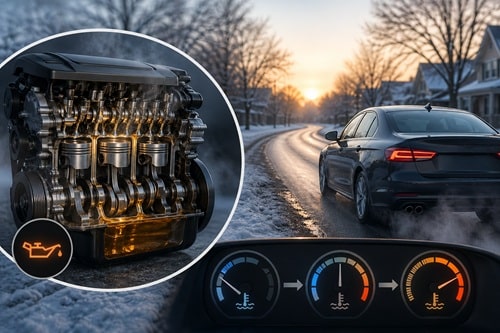
When a vehicle is first started, the engine oil has not yet fully circulated through all internal components. During this brief period, metal parts are more vulnerable to friction because lubrication is not at optimal levels. Driving aggressively immediately after starting the engine increases stress on these components, particularly in colder temperatures when oil thickens. While modern engines are designed to warm up more efficiently than older models, they still benefit from a short period of gentle operation before being pushed harder.
Gradual acceleration during the first few minutes of driving allows the engine to reach its ideal operating temperature more evenly. This helps ensure that oil flows properly, reducing unnecessary wear on moving parts such as pistons, valves, and bearings. Ignoring this step consistently can contribute to long-term engine degradation and reduced fuel efficiency. Adopting a smoother start, rather than idling for extended periods or accelerating harshly, provides a balanced approach that supports engine health without wasting fuel.
Hard Acceleration and Sudden Braking
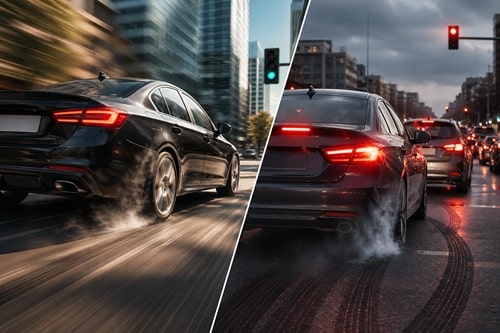
Rapid acceleration places immediate strain on the engine, transmission, and drivetrain by forcing these systems to work harder than necessary. This type of driving increases fuel consumption and can lead to premature wear on components that are designed for gradual load changes. Similarly, sudden braking puts excessive pressure on brake pads and rotors, causing them to wear down more quickly. Over time, these patterns not only reduce the lifespan of key parts but also affect overall driving smoothness and control.
Consistent stop-and-go behavior, especially in urban environments, can amplify these effects when combined with aggressive driving habits. Smooth acceleration and gradual braking distribute stress more evenly across the vehicle’s systems, helping maintain performance and reduce maintenance costs. In addition, controlled driving improves safety by allowing more time to react to changing road conditions. Making a conscious effort to drive more steadily can significantly extend the life of both braking and engine components.
<!-- End Ezoic - wp_under_second_paragraph - under_second_paragraph -->
Riding the Brakes and Improper Downhill Driving
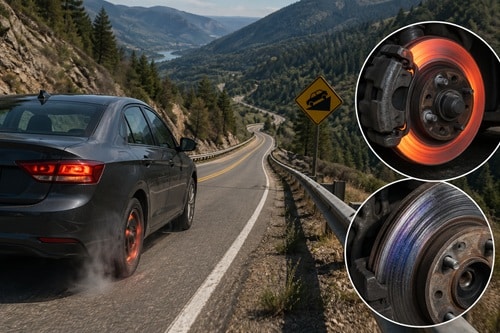
Maintaining constant pressure on the brake pedal, often referred to as riding the brakes, generates excessive heat within the braking system. This heat buildup can lead to brake fade, a condition where braking effectiveness is reduced due to overheating. As temperatures rise, brake pads and rotors wear more quickly, and in severe cases, components can warp or become damaged. This issue is especially common when driving downhill, where prolonged braking is often used to control speed.
Proper downhill driving techniques can help reduce this strain by allowing the engine to assist in slowing the vehicle. Downshifting to a lower gear enables engine braking, which reduces reliance on the brake system and prevents overheating. Alternating between light braking and release, rather than continuous pressure, also helps maintain safer temperatures. Over time, avoiding brake riding preserves braking performance, extends component lifespan, and contributes to safer driving conditions.
Neglecting Tire Care and Driving on Improper Inflation
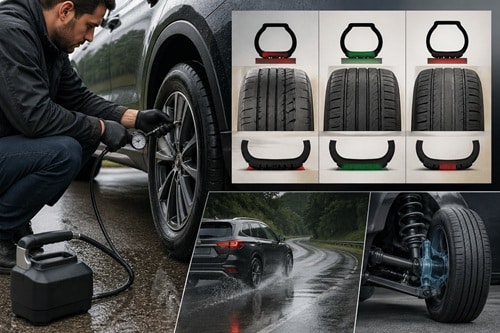
Tires play a critical role in how a vehicle handles, brakes, and maintains stability on the road. When tire pressure is too low, more of the tire’s surface makes contact with the road, increasing rolling resistance and causing the edges to wear out faster. Overinflated tires, on the other hand, reduce the contact patch and lead to excessive wear in the center of the tread. Both conditions reduce traction, especially in wet or slippery conditions, and can make the vehicle harder to control during sudden maneuvers.
Improper tire pressure also places additional strain on suspension components, as the system must compensate for uneven contact with the road. Over time, this can contribute to alignment issues and uneven wear across multiple parts of the vehicle. Regularly checking tire pressure and ensuring it matches manufacturer recommendations helps maintain consistent performance and safety. Keeping tires properly inflated not only extends their lifespan but also improves fuel efficiency and overall driving comfort.
Common brake maintenance mistakes that compromise vehicle safety and lead to costly repairs Your vehicle’s braking system is arguably the most critical safety component separating you from potential disaster on the road….
Everyday driving behaviors that seem harmless may be causing significant damage to your vehicle’s most vital component. Your engine is the heart of your vehicle, and like any mechanical system, it requires…
Beyond lead-footed driving and low tire pressure, hidden fuel thieves could be silently draining your tank and your wallet every time you drive. Most drivers understand that aggressive acceleration and high speeds…