When Bundling Isn’t Actually the Better Deal
Bundling doesn’t automatically beat shopping the two policies separately. Sometimes one insurer offers a strong auto rate but a weaker home rate (or the reverse), and once you combine them, the bundled total ends up higher than what you’d pay by keeping the policies with two different companies.
The III makes this point directly: “It still makes sense to shop around” even when a multi-policy discount is on the table, because “you may save money buying from different insurance companies, compared with a multipolicy discount.” The NAIC’s own consumer guide backs up the same habit, noting that “different insurance companies charge different rates for the same coverage” and that “not all insurance companies provide the same level of claims service,” so “it makes sense to shop around for the best insurance company for your needs” — discount or no discount.
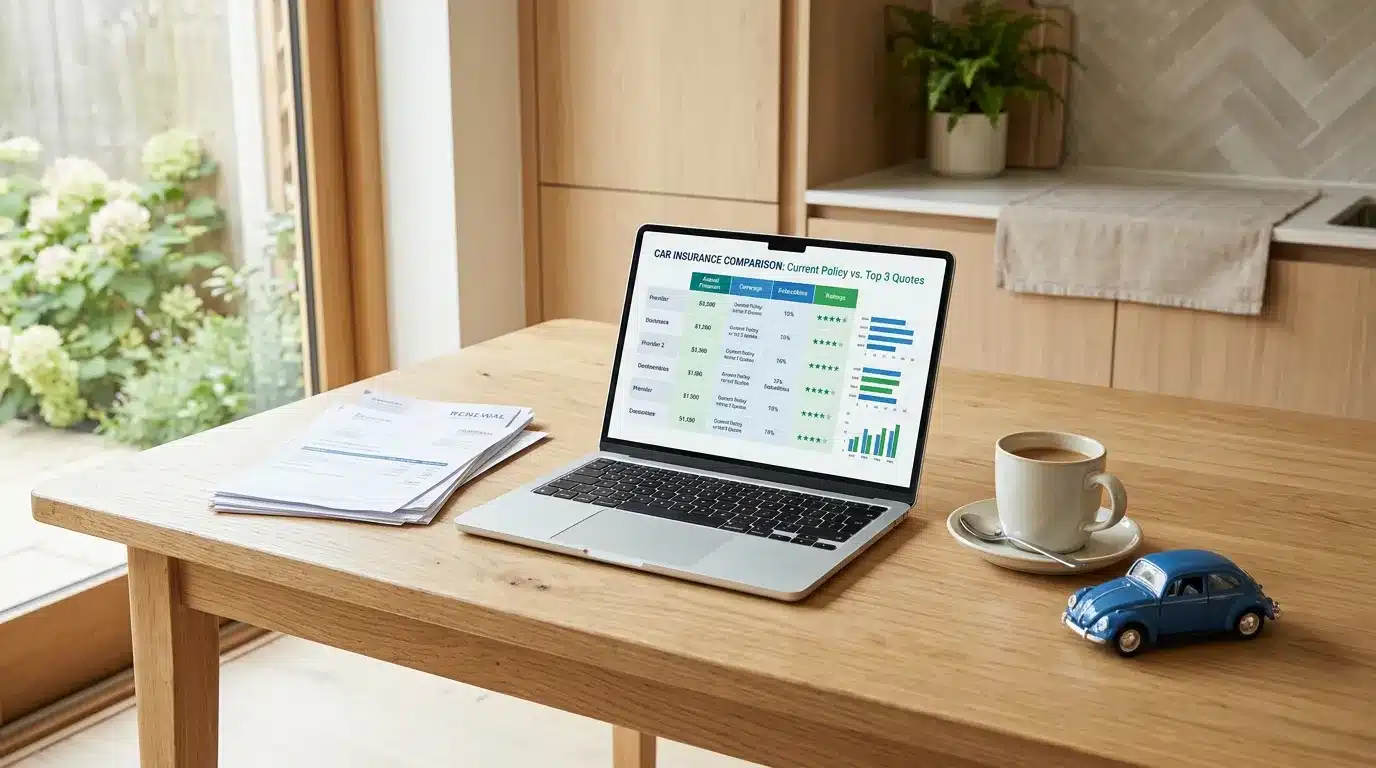
The only way to know for sure which side of that trade-off you’re on is to compare your current bundled rate against separate quotes every so often — which is exactly the kind of periodic check that’s easy to put off and easy to benefit from.
How to Actually Compare and Bundle Your Policies
Once you’ve decided a bundle comparison is worth doing, the process itself is straightforward. A few steps make the comparison actually apples-to-apples instead of just apples-to-a-lower-number:
- Pull your current policy details first. Coverage limits, deductibles, and renewal dates for both your auto and home policy, so you know exactly what you’re comparing against.
- Get a bundled quote, then get separate quotes. Ask your current insurer (or a new one) for a bundled rate, and separately price out auto and home coverage on their own so you can see both numbers side by side.
- Match the coverage levels before you compare the price. A bundled quote with a lower premium but a higher deductible or thinner coverage isn’t actually the cheaper option — it’s a different policy.
- Time the switch around your renewal dates. Moving mid-term can trigger a cancellation fee on one or both policies, which can quietly erase whatever the bundle discount just saved you.
Make Bundling Part of a Regular Checkup, Not a One-Time Decision

Treat comparing your bundle like any other recurring bill review.
Insurance circumstances change more often than most drivers realize. Rates get repriced annually, discounts get renegotiated at renewal, and life events like a new car, a refinanced mortgage, or a move to a new state can all change what a bundle is actually worth. A bundle that made sense three years ago isn’t guaranteed to still be the best option today.
Treating that comparison as a recurring habit — an annual insurance checkup, similar to reviewing a credit report — is a more reliable way to know you’re still getting a fair deal than assuming last year’s bundle still holds up.
Frequently Asked Questions
Does bundling auto and home insurance always save money?
Not always. The Insurance Information Institute notes that it still makes sense to shop around, since you may save more buying auto and home coverage from two different companies than by taking a multi-policy discount from one.
How much can bundling auto and home insurance actually save?
Research from Insure.com puts the typical combined-premium discount at around 15%, with many households landing between 10% and 25% depending on the insurer and state. Advertised maximum discounts can run higher, but that’s a ceiling, not a typical result.
Why do insurers offer a discount for bundling policies?
Insurers give a break when a customer buys two or more types of policies from them, and multi-policy customers also tend to stay longer and shop around less — which makes the discount a real pricing decision, not just marketing.
How often should you compare your bundled insurance rate?
Regulators and industry researchers agree on the same habit: keep shopping around periodically even if you’re bundled. The NAIC notes that different insurance companies charge different rates and offer different levels of claims service, and the III points out that a multi-policy discount doesn’t guarantee you’re getting the best overall price.
What if one insurer has a cheaper auto rate but a pricier home rate?
That’s one of the more common ways a bundle ends up costing more than separate policies. Compare the combined total against separate quotes rather than judging the deal by the discount percentage alone.
Keep Your Whole Policy in Check
Continue with How To Get The Most Out Of Your Car Insurance for more ways to make sure your policy is still working for you, bundled or not.
- Insurance Information Institute, “Nine Ways to Lower Your Auto Insurance Costs”
- National Association of Insurance Commissioners (2022), “A Consumer’s Guide to Auto Insurance”
- Forbes Advisor, “Best Home and Auto Insurance Bundles”
- Insure.com, “How to Bundle Home and Auto Insurance Policies to Save Money”
AutosTodayMag is not an insurer or licensed insurance agency and does not provide insurance directly. We provide general auto insurance information and may connect consumers requesting quotes with licensed agents or insurance providers.